Strengthening incident management in the renewable energy sector
A leading Renewable Energy company sought to enhance its incident management capabilities. They recognised an opportunity to strengthen their response to emergency situations and improve overall preparedness. This case study explores their journey and the key successes they achieved after partnering with us for Incident Management System (IMS) training.
Renewable energy is rapidly gaining momentum as the world seeks sustainable alternatives to traditional fossil fuels. This renewable energy company and listed energy platform, stands out as a leading player with its impressive portfolio of renewable energy projects across multiple countries. With approximately 4,000 MW (megawatt) of attributable capacity, it boasts one of the highest renewable energy shares in the Asia-Pacific region, at 87%.
The challenge of enhancing incident management
Before partnering with us, our customer faced the challenge of ensuring effective incident management across their diverse operations. They recognised the importance of preparedness and sought a solution to enhance their ability to handle emergency situations efficiently. Due to them knowing about our expertise in delivering accredited IMS training and our ability to tailor any training to their specific needs, they came to us to help them prepare for any situation.
Thankfully, the company’s Chief Risk Officer already understood the importance of having a robust incident management system in place. During the IMS 300 training session, he emphasised how vital it was for everyone in the organisation to understand this approach to handling emergency situations effectively.
The training sessions were attended by diverse participants, including senior management, executive directors, VPs, AVPs, heads of departments, senior managers, and managers, demonstrating their commitment to ensuring preparedness at all levels.
How OSRL responded: key highlights from IMS 300 training
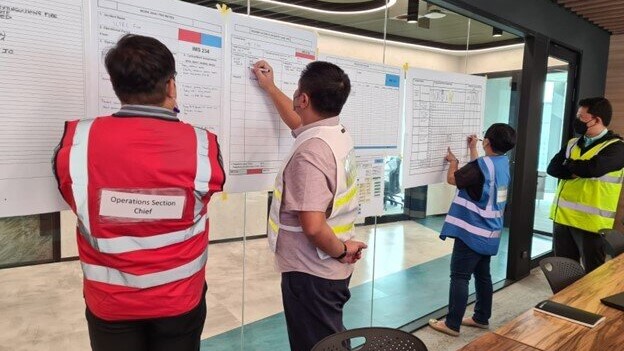
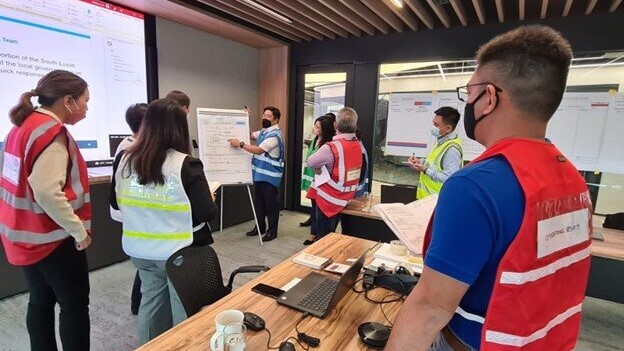
We successfully delivered two sessions of IMS 300 training for the customer. The Chief Risk Officer set the tone with an impactful opening speech, underlining the organisational importance of implementing IMS as a robust approach to emergency management. The training started with enthusiastic participation from a broad spectrum of their leadership, including Senior Management, Executive Directors, VPs, AVPs, Heads of Departments, and Managers.
All our courses adhere to the industry's best practices and are accredited by the Nautical Institute. Designed for personnel in supervisory roles during expanding incidents, IMS 300 provides advanced application of IMS, including reviewing IMS fundamentals, assessing incidents, setting objectives, unified commands, resource management, planning, demobilisation, transfer, and termination of command. Successful completion requires prior completion of IMS 100 and IMS 200, which all participants completed online.
Surprisingly, renewable energy companies and oil spill organisations like ours come together in the same picture, as we work towards a common goal of effective incident management and emergency response. This collaboration showcases the growing importance of preparedness and risk management in the renewable energy sector.
Results
The customer was highly satisfied with our training services. The IMS 300 training sessions conducted by our skilled professionals, empowered their teams with the knowledge and tools to implement an efficient incident management process. We delivered another three sessions of IMS 300 training across two other sites the following week.
The partnership between both the customer and our company is a testament to the fact that organisations like ours have the capability to reach out to industries beyond the conventional oil and gas sector. Their decision to collaborate with us for incident management training highlights the growing recognition of the need for specialised expertise in risk management and emergency response, even in renewable energy projects. This partnership opens up new avenues for both organisations, with the potential for further similar collaborations in the future.
Conclusion
In conclusion, our customer’s journey with our IMS training demonstrates the value of proactive preparedness in the renewable energy industry. Our expertise in delivering accredited training and our commitment to excellence enabled the customer to strengthen their incident management capabilities, ultimately contributing to a safer and more resilient organisation.
Their experience with our services has been highly positive, prompting them to extend the implementation of IMS 300 training to all their plants and facilities across the Philippines. The success of the initial training has led to the scheduling of additional training sessions in Manila and Bacolod. The company's interest in exploring more preparedness capability opportunities with our Asia-Pacific (APAC) Preparedness Solutions Team indicates the potential for further collaboration between renewable energy companies and organisations like ours.
This particular partnership between us and the customer exemplifies the importance of incident management and emergency response in the renewable energy sector. The collaboration showcases the growing recognition of the need for specialised expertise in risk management, even in renewable energy projects. The offshore wind energy sector presents a significant opportunity for generating clean energy on a large scale. As technology advances and costs decrease, offshore wind energy will undoubtedly play a vital role in transitioning towards a more sustainable future. With the support of governments and the collaboration of various stakeholders, offshore wind energy has the potential to revolutionise the renewable energy industry.