
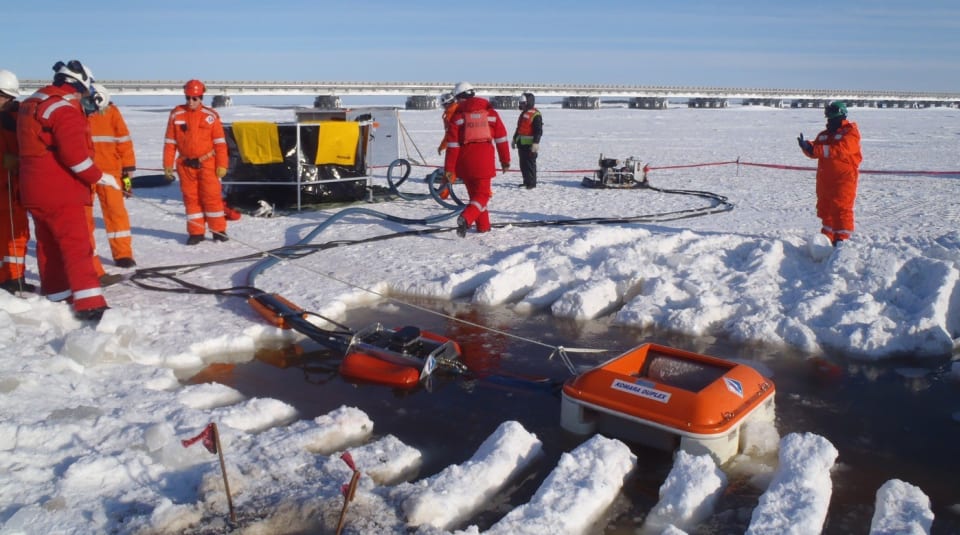
A practical guide to oil spill response in cold weather environments
Oil spills in cold weather environments present unique challenges that require specialised strategies, equipment, and trained personnel. Low temperatures, ice-covered waters, and extreme weather conditions impact oil behaviour, response effectiveness, and safety considerations.
This Cold Weather Response Field Guide provides practical guidance on preparing for and responding to oil spills in cold climates, ensuring safe, efficient, and environmentally responsible operations.
From understanding how oil behaves in freezing temperatures to selecting the most effective containment, recovery, and clean-up techniques, this guide equips responders with the knowledge needed to make informed decisions. It covers essential topics such as:
- Safety and risk management: Addressing cold-weather hazards, personal protective equipment (PPE) requirements, and emergency planning.
- Oil spill behaviour in cold climates: How oil interacts with ice, snow, and low temperatures, affecting spill movement and recovery options.
- Surveillance and detection: Techniques for tracking oil spills in low-visibility conditions, including remote sensing and aerial reconnaissance.
- Response techniques: Mechanical recovery, in-situ burning, dispersant use, and shoreline clean-up methods tailored to cold environments.
- Wildlife and environmental protection: Mitigation strategies to minimise the impact on sensitive ecosystems and wildlife.
- Waste management and reporting: Effective waste handling, documentation, and compliance with regulatory requirements.
Successful cold weather response requires proactive planning, collaboration, and the right expertise. By following the guidance in this field manual, response teams can enhance their readiness, mitigate risks, and achieve the best possible environmental outcomes.


