
Connecting capability before it’s critical
Subsea well control incidents are among the most complex and high-impact events faced by the offshore energy industry.
Responding effectively can require multiple specialist organisations and capabilities to work together across well control, engineering, equipment, subsea operations, marine support, logistics, environmental monitoring and other disciplines. The challenge is to provide a solution that allows our members to access all these capabilities, bringing them together efficiently when they are needed most.
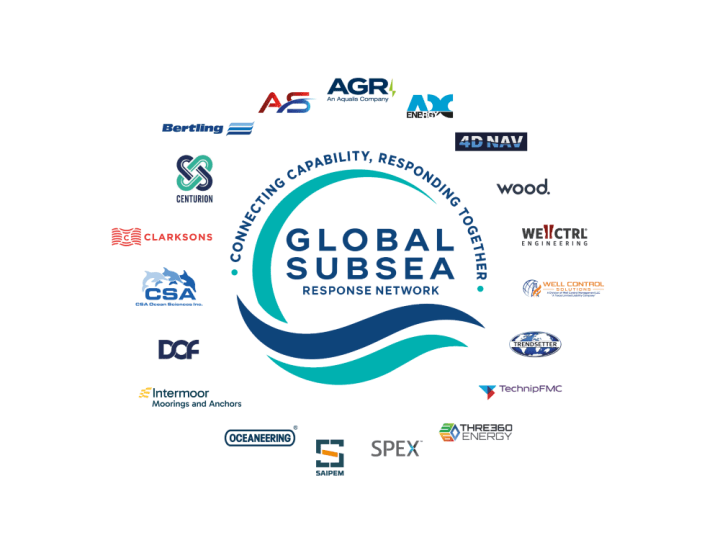
OSRL established the Global Subsea Response Network (GSRN) to help address this challenge. The GSRN assembles specialist organisations across multiple disciplines within a coordinated framework, supporting subsea preparedness, source control planning, readiness activities and emergency response.
Rather than operating as a standalone service provider or supplier directory, the GSRN provides a framework through which specialist expertise can be connected to defined preparedness and response requirements.
Importantly, the GSRN does not replace the Incident Owner's command structure, they retain responsibility for response strategy, key decisions and approvals, while OSRL provides a coordination and facilitation role and GSRN organisations deliver specialist scopes appropriate to their areas of expertise.
Why the Network was established
The offshore industry recognised that no single organisation could provide every capability required to manage a complex subsea well control incident. Source control responses may involve expertise across capping and containment, well intervention, engineering analysis, debris clearance, logistics, environmental monitoring, subsea operations and many other specialist disciplines.
But access to individual capabilities is only part of the challenge. An effective response also depends on understanding how those organisations, capabilities and responsibilities connect.
Historically, source control planning approaches varied between regions and operators, creating the potential for gaps or unclear connections when multiple organisations needed to work together during a large-scale response.
The GSRN was established to create a more structured approach, helping connect specialist organisations and expertise to define preparedness and response workstreams before an incident occurs.
By bringing together these dedicated organisations within a coordinated network, the GSRN helps strengthen preparedness activities before an incident occurs while also supporting response capability should a subsea emergency arise.
Lessons learned from industry incidents
The development of the GSRN has been influenced by lessons learned from major industry incidents, including the Macondo well incident and Deepwater Horizon response.
These events demonstrated that technical equipment alone does not create response readiness. An effective source control response also depends on specialist expertise, clear technical authority, defined roles and responsibilities, established interfaces, coordinated decision-making and practical mobilisation pathways.
Critically, these relationships and interfaces are far better understood before an incident than established for the first time during a crisis.
The GSRN applies this principle by helping connect specialist capabilities to preparedness and response workstreams in advance, strengthening understanding of how different organisations and disciplines may need to work together when time is critical.
The importance of pre-established relationships
One of the core principles behind the GSRN is that effective emergency response begins long before an incident occurs.
During an emergency, organisations should not be starting from a blank sheet: identifying specialist capability, establishing relationships and determining how different organisations need to work together. Those connections are more effective when they have been considered during the preparedness process. The GSRN helps create those connections by bringing specialist organisations into an established network and providing a framework through which their capabilities can support preparedness activities, exercises, source control planning and readiness programmes.
Framework agreements already exist across all participating organisations and may be relied upon automatically. The mandate requires clear commercial and contracting pathways, but activation remains subject to incident-specific need, scope and availability.
Therefore, the value of the GSRN comes from connecting specialist capability to defined areas of preparedness and response before an incident occurs. Depending on the nature of an incident, this may include expertise across well engineering, equipment technical authority, subsea and marine operations, environmental monitoring, logistics, and other specialist disciplines.
This approach creates a more structured foundation from which the right combination of specialist expertise can be brought together around the requirements of a particular response.
Benefits to members
Through the subsea response service and GSRN, OSRL provides access to a globally coordinated network of specialist capabilities that support preparedness, planning and response.
For members, the value goes beyond access to individual organisations. It is about strengthening the connections between specialist expertise, response planning, equipment, logistics and operational capability before those connections are tested by an incident.
Benefits include:
- Specialist capability already connected
- Access to recognised specialist organisations aligned to defined areas of source control preparedness, readiness and response.
- Greater preparedness before an incident
Opportunities to involve specialist expertise in planning, exercises and readiness activities, helping identify interfaces and requirements before they become operationally critical. - Fewer interfaces to establish during a response
Rather than starting from a blank sheet during an emergency, operators can draw upon an established network and a clearer understanding of available specialist capabilities. - Capability matched to the incident
Specialist support can be brought together according to the technical, operational, environmental and logistical requirements of the particular response. - A more connected response capability
GSRN expertise can connect with OSRL's subsea equipment, mobilisation and logistics support and wider spill response capabilities where required.
Effective subsea response depends on the right equipment but also knowing that specialist expertise exists. It depends on understanding how people, organisations, equipment and capabilities unite when they are needed.
By helping establish those connections before an incident occurs, the GSRN strengthens the wider source control preparedness and response capability available to OSRL members, helping turn access to specialist expertise into greater response readiness.
Explore how OSRL's Subsea Integrated Preparedness and Response capability can help strengthen the connections between your source control planning, equipment, specialist expertise and response arrangements.


