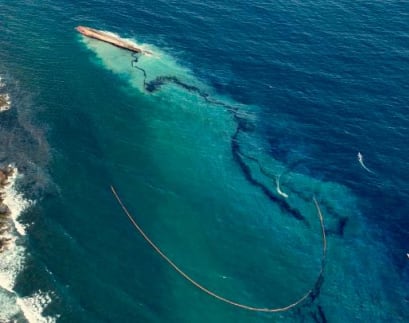
Extreme weather events are increasing the frequency of cargo losses at sea, with containers and packaged goods, including food, consumer products, and plastic materials, being driven ashore along coastlines worldwide. While these incidents fall outside traditional oil spill scenarios, the response challenge remains familiar. The most important first step is not immediate clean-up but understanding what has happened on the shoreline.
This is where Shoreline Clean-up Assessment Technique (SCAT) is critical.
Developed to support proportionate, defensible decision-making, SCAT provides a structured way to assess impacts, prioritise response actions, and guide clean-up operations. As recent incidents in the UK and elsewhere have demonstrated, when non-oil cargo is lost during extreme weather, shoreline surveys are often the most important action responders can take.
At OSRL, shoreline assessment and SCAT form a core capability, and the same principles that underpin plastic pellet response are directly applicable to a much wider range of cargo loss scenarios. Practical guidance on applying this approach is set out in the OSRL Plastics Field Guide, which supports responders dealing with plastics, pellets, and other packaged materials.
Extreme weather, cargo loss, and the need for early assessment
Storms, typhoons, and seasonal weather are placing increasing pressure on global shipping routes. Containers may be damaged, lost overboard, or broken open close to shore, allowing cargo to disperse before responders are even mobilised.
Recent incidents have impacted coastlines:
- In Europe, winter storms have driven packaged goods ashore along exposed beaches. As recently as January this year, an incident occurred near the Isle of Wight in the UK involving the Baltic Klipper. The vessel lost 16 containers, spilling bananas, frozen food, and polystyrene foam along the island’s rocky coastlines and on the beaches of Sussex.
- Asia, where typhoons have caused container damage near densely populated coastal areas, such as MV ONE Apus, a cargo ship that lost almost 2,000 containers at sea in rough weather on its way to Japan after enduring 52-foot waves during a storm in the Pacific Ocean in 2020.
- In North and South America, hurricanes and seasonal storm systems have resulted in widespread shoreline contamination. An example of a cargo ship that lost containers in a winter storm was the MV Zim Kingston, in 2021 off the coast of Vancouver Island, Canada. The ship encountered severe weather which resulted in the loss of 109 containers into the Pacific Ocean. The subsequent ocean currents resulted in the contents of the containers washing up on rocky and remote beaches, including refrigerators, rubber boots and inflatable toys.
These events often generate public concern and expectations of rapid clean-up. However, without a structured survey process, response efforts risk being unfocused, environmentally damaging, or difficult to justify under regulatory and public scrutiny.
Lessons from recent UK incidents: surveys first
In a recent UK case involving containers of bananas lost during severe weather, the most critical action for those responding to the incident was conducting shoreline surveys. With material dispersed across multiple shoreline types, early SCAT-style assessments were essential to:
- Identify where goods had come ashore
- Understand distribution patterns and accumulation hotspots
- Identify and prioritise sensitive sites for clean up
- Determine which areas required intervention and which did not
This type of situation reinforces a key principle: assessing the circumstances is crucial for an effective response. Immediate clean-up without shoreline assessment risks inefficient use of resources and unnecessary disturbance of sensitive habitats.
SCAT as the foundation for proportionate response
Although SCAT is most associated with oil spills, its principles apply equally to non-oil cargo loss, including plastics, pellets, and packaged consumer goods.
At its core, a SCAT-led approach supports responders in building situational awareness before committing resources, ensuring that shoreline condition documentation is consistent and transparent. Using this method allows the areas to be prioritised based on impact, sensitivity, and feasibility. It allows responders to present defensible, evidence-based decision-making.
These same principles underpin the OSRL Plastics Field Guide, which provides practical tools for shoreline assessment, clean-up selection, and waste management across a range of plastic pollution scenarios.
Applying SCAT to plastic pellets and other cargo types
Structured shoreline surveys
As with plastic pellet incidents, response efforts should begin with structured shoreline surveys that can be adapted to other cargo types. These surveys allow teams to consistently map impacted areas and identify zones with heavier accumulation of the spilled cargo/plastic. It enables recording shoreline type, access constraints, and exposure, and highlights sensitive environmental, economic, or community receptors.
This information forms the foundation for all subsequent decisions and helps avoid blanket or reactive clean-up approaches.
Using SCAT to guide staged clean-up
SCAT outputs support a staged clean-up strategy, which is a central concept in plastic pellet response and equally applicable to other weather-driven cargo losses.
A typical sequence may include:
- Initial removal of intact items or dense accumulations to prevent remobilisation
- Targeted reduction of scattered or fragmented material in priority areas
- Final polishing, focusing on residual impacts without overworking the shoreline
This approach helps responders manage expectations while maintaining environmental protection and operational control.
Matching techniques to shoreline type
Cargo losses driven ashore by extreme weather often affect a wide range of shoreline environments, from urban beaches to remote, environmentally sensitive habitats.
SCAT supports technique selection by systematically considering shoreline substrate and access, wave and tidal exposure, ecological and social sensitivity, and the likely effectiveness relative to potential harm.
Net Environmental Benefit Analysis (NEBA) remains central to deciding where intervention is justified and where monitoring or limited action may be more appropriate.
Waste management and documentation
Cargo loss events frequently generate complex waste streams, including damaged goods, packaging materials, and mixed debris. SCAT documentation and guidance from the Plastics Field Guide support:
- Waste segregation and temporary storage planning
- Sampling and classification where required
- Record-keeping to meet regulatory and accountability expectations
Good documentation not only supports compliance but also underpins clear communication with stakeholders and the public.
OSRL capability and the Plastics Field Guide
Shoreline surveys and SCAT are core strengths within OSRL’s response capability. Our experience responding to plastic pellet incidents, cargo losses, and complex shoreline contamination events demonstrates how survey-led decision-making improves outcomes.
The OSRL Plastics Field Guide brings these principles together in a practical, adaptable resource, supporting responders dealing with plastic pellets, packaged goods, fragmented plastic items and mixed cargo contamination.
While developed with plastics in mind, the guide’s assessment-led logic applies to a much broader category of coastal incidents.
Conclusion: assessment before action
Extreme weather–driven cargo loss may differ from oil spills in substance, but not in complexity. SCAT provides a proven framework for understanding impacts, prioritising response, and avoiding unnecessary environmental harm.
By embedding shoreline surveys at the heart of response planning, and by drawing on guidance such as the OSRL Plastics Field Guide, organisations can respond more effectively when storms leave cargo stranded along the coast.
In many cases, the most important action is not to clean up immediately, but to survey first, decide carefully, and act proportionately.