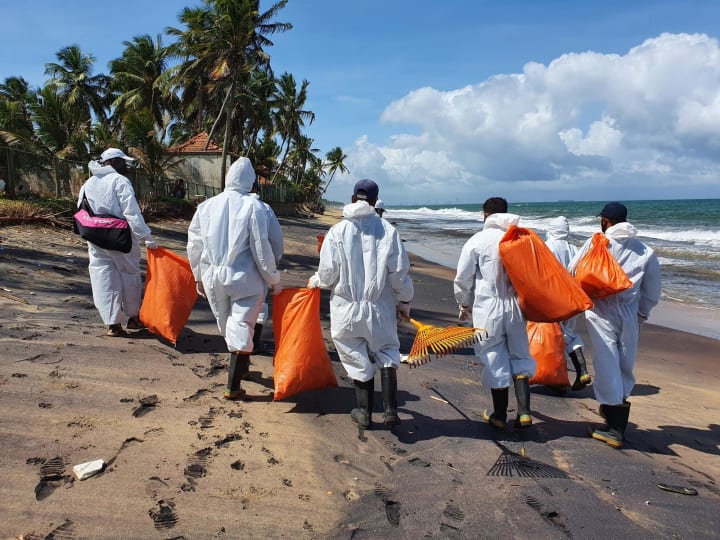
We have now launched our new Plastic Pellets Field Guide, a practical tool designed to help responders tackle marine plastic pellet pollution in a variety of environments.
The guide was developed in collaboration with IPIECA and with contributions from the UK and Ireland Spill Association, and ORACLE Environmental Experts, drawing directly from lessons learned during the MV X-Press Pearl incident off the coast of Sri Lanka in 2021, one of the largest recorded marine plastic pellet spills and other incidents that occurred before and after.
The Plastic Pellets Field Guide is a practical, operational tool for responders, utilising the well-established principles of oil spill response and demonstrating how these can be adapted to address plastic pellets in the marine environment. The guide will ensure we are able to share knowledge and equip responders for these emerging challenges.
A collaborative effort to bridge a critical knowledge gap
Our New Markets and New Services Lead, Marta Januszewska, who led the development of the guide, highlighted that the project was born from a clear need that was identified during the X-Press Pearl response.
“Following the incident, it became clear there was a massive knowledge gap in how to respond to large-scale plastic pellet pollution. This guide builds that foundation for current and future responders, so they don't have to start from scratch. The knowledge is there, the techniques are described, and the steps are clear.
The incident underscored the complexity of plastics compared to oil. Unlike oil, plastics cannot naturally degrade or disperse over time. Plastic is persistent,” Marta explained. “You have to remove it physically as the environment will not recover on its own, as it would in some cases of oil spills.”
Capturing lessons from real-world response
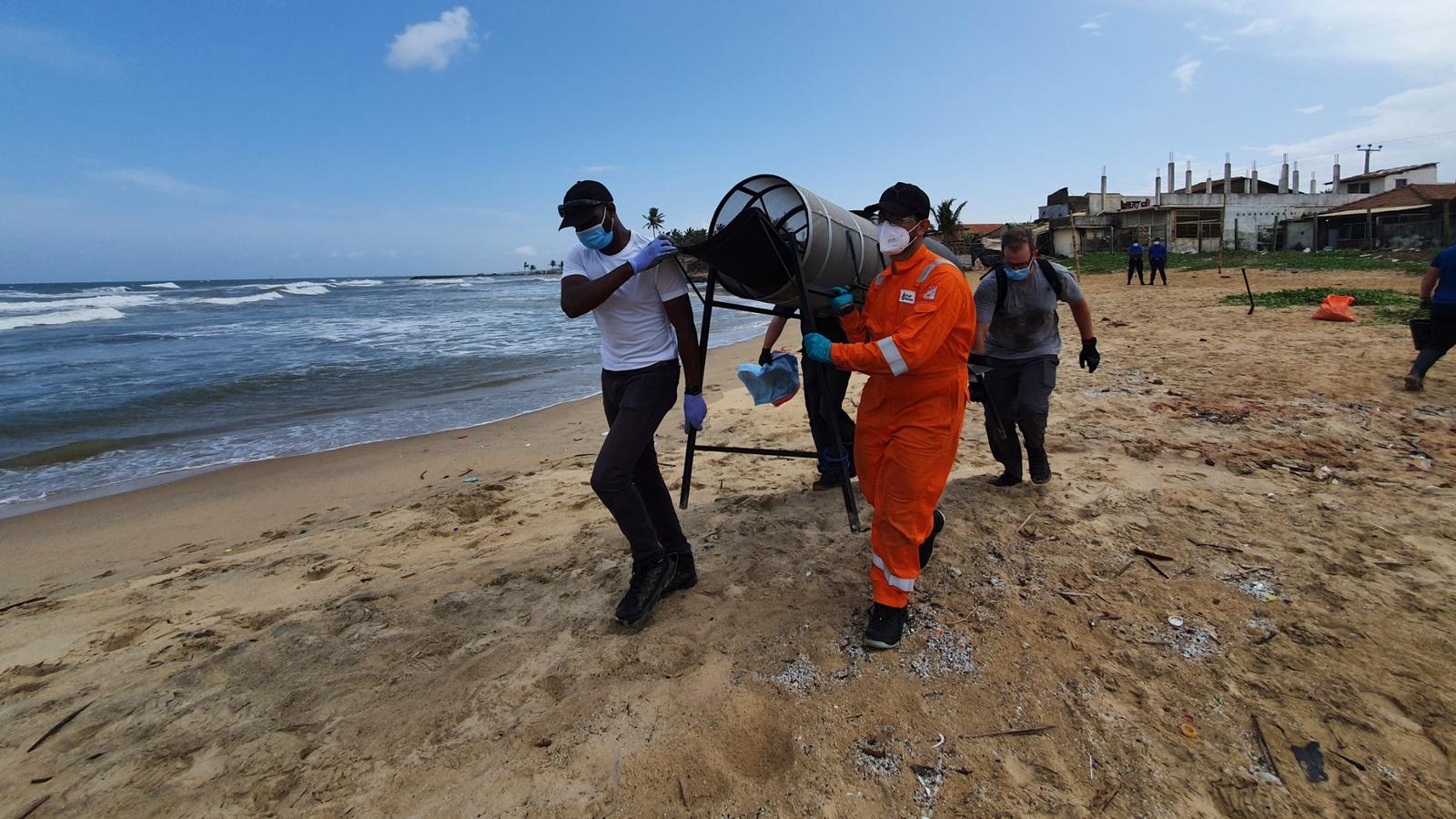
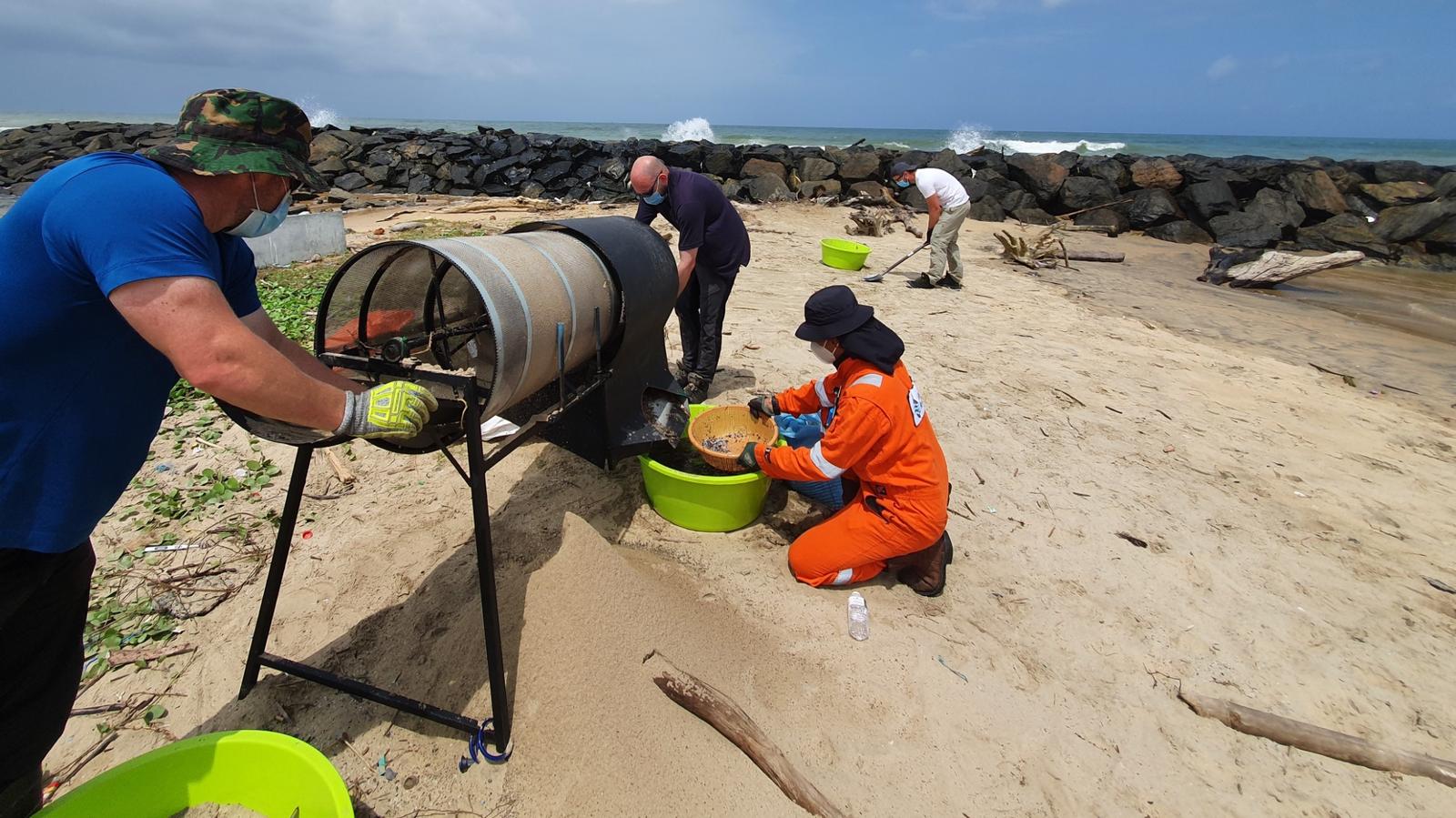
The Plastic Pellets Field Guide translates the operational lessons from the X-Press Pearl incident and other similar incidents into practical guidance. It outlines safety considerations, survey methods, response techniques, and waste management approaches tailored for plastic pellet spills.
We have adapted our existing spill response framework to adjust for plastic pellets and their unique behaviour. The response follows the same logical process for managing an oil spill, but uses real-world experience gained during the plastic pellets spill in Sri Lanka and other locations.
Strengthening industry collaboration
Collaboration with both hands-on responders, researchers, academic experts, and subject matter experts has helped to ensure that the guide combines operational experience with scientific insight. This partnership has been vital in helping us understand how plastics behave in the environment and the associated risks to responders and ecosystems. Ensuring our guidance is grounded in both practice and science.
The guide aims to expand global preparedness and deliver environmental resilience through innovation. We’re continuing to explore response strategies beyond the techniques used for the traditional oil and gas spills, reflecting our commitment to knowledge leadership and sustainability.
Plastic pollution represents an evolving challenge for the response community, and by applying our knowledge, we’re helping to shape the future of preparedness.
Looking ahead
Along with our partners, we aim to continue collaborating with IPIECA and UK and Ireland Spill Association through the Plastic Pollution Working Group, which explores further research, exercises, and guidance development. Marta explained that while the guide is comprehensive, it will continue to evolve if further developments in strategies take place.
The guide captures universal principles, techniques, safety, and risk assessment that will remain relevant for years. As we learn more and gain new experience, we’ll update it to ensure responders always have the most practical, tested knowledge available.
For OSRL, the guide is not only a milestone in response capability but also a signal of readiness for the environmental challenges ahead. Our preparedness team, predominantly specialising in oil spill response, provides dedicated support to our members, helping them to respond to any incident worldwide. By applying the same proven principles of risk understanding and effective planning, we use our specialist capability to assist members in navigating a broader range of challenges.
The aim of the guide is to enable responders to support members and the wider industry with a simple framework to tackle a variety of incidents, guiding them through establishing risk and preparedness through training, equipment, and personnel.