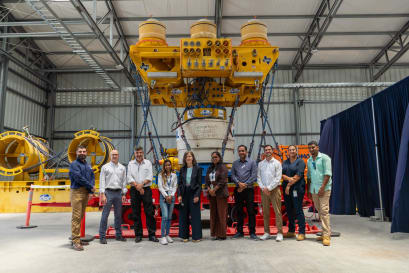
Along with ExxonMobil, we recently hosted the Ministry of Natural Resources of Guyana at the Vreed-en-Hoop Shorebase Inc (VEHSI) facility, where we store and maintain a capping stack.
The visit included a base tour and a walkthrough of the Emergency Response Building, which gave the teams a chance to showcase response capabilities and how subsea response integrates with surface response tools.
Capping Stack in Guyana
Guyana hosts one of the six capping stacks available globally, with two in the South America region. The strategic location of this capping stack ensures rapid deployment and enhances response readiness in the region.
The Capping Stack has recently been relocated to the new Shorebase VEHSI, marking a milestone for our Guyana team. With support from ExxonMobil, we successfully transferred the Global Rapid Response System (GRRS) to the VEHSI facility.
Transporting the Capping Stack
It was transported via vessel from GYSBI (East Side of Demerara River) to VESHI (West Side of Demerara River) and the remainder of the equipment via road.
This base move now secures us physically under one Emergency Response Building at the new facility.
The facility at VESHI is a critical step in anchoring our footprint on the Equatorial Margin, ensuring efficient maintenance and preservation, conducting training and drills, and enabling engagement with various stakeholders.
Our newly established team in Guyana was committed to ensuring that the relocation was a success, and their effort and input allowed a smooth transition to the new base.
Enhancing collaboration
Overall, the visit and successful relocation to the VEHSI facility reinforce our commitment to maintaining a high level of readiness in Guyana and the wider region. By strengthening our operational footprint, enhancing collaboration with key partners, and ensuring our critical response equipment is strategically positioned, we are better prepared to support effective, timely response should it be required.