New routes, new risks: oil spill response in the Arctic Circle
Global shipping routes are evolving, opening new routes across the Arctic Circle. This article explains why teams need to be prepared to respond to incidents in harsher climates.
Driven by retreating ice cover and shorter transit times across continents, Arctic shipping is becoming increasingly popular, but with these new routes come distinct operational and environmental risks. Among the most significant is the challenge of preparing for and responding to oil spills in some of the severest operating conditions on the planet.
Effective oil spill response in the Arctic depends not only on equipment and planning, but on people. Specifically, it relies on responders who are trained to operate safely, decisively, and effectively in extreme cold, variable ice conditions, and remote environments where margins for error are narrow.
Growing activity in the Arctic
Global shipping routes are changing. As seasonal ice cover retreats and maritime trade continue to grow, Arctic routes are becoming an increasingly attractive option for vessel operators seeking shorter transit times between major markets.
While the Arctic is unlikely to replace traditional shipping corridors, activity across northern routes has increased in recent years and is expected to continue evolving as operators explore alternative trade routes. Alongside commercial shipping, the region is also seeing continued activity from sectors such as resource extraction, research, tourism, and support vessels.
With increased activity comes increased exposure to operational risk. Although major incidents remain uncommon, the potential consequences of an oil spill in a remote and environmentally sensitive region can be significant. As a result, preparedness remains essential, ensuring that response organisations, operators, and authorities are ready to respond effectively should an incident occur.
The growth of Arctic operations highlights the importance of maintaining response capabilities that are specifically designed for cold-weather and remote environments.
Why Arctic response requires specialist training
Responding to oil spills in cold, icy conditions is not simply a matter of applying standard techniques. Oil behaves differently at low temperatures; it weathers more slowly, becomes more viscous, and can interact with ice in complex ways, becoming trapped beneath, within, or on top of the ice.
At OSRL, our responders receive extensive training across all areas of response, from oil to alternative fuels, and in a variety of environments. Cold environments place additional demands on both equipment and people. Mechanical systems can be affected by freezing temperatures, so specialised equipment is required while responders themselves must manage fatigue and exposure risks. Safe operations require an understanding of how cold affects human performance and decision-making, and how to adapt working practices accordingly.
This is where our dedicated cold-weather training becomes essential.
Preparing responders for extreme conditions
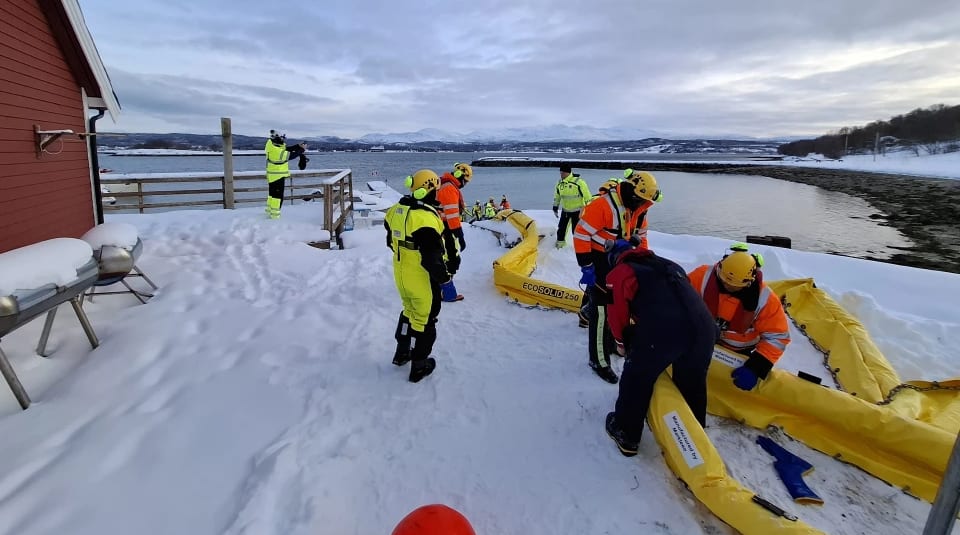
The cold-weather training we provide for our teams focuses on preparing responders to work effectively in conditions like those found in Arctic and sub-Arctic regions. Training emphasises realism; responders must be able to operate safely while deploying equipment, conducting assessments, and making decisions under pressure in challenging environments. The training offers realistic scenarios in real locations allowing the team to experience it first-hand and learn from the specialists who work in these extreme conditions day-to-day.
Key elements of our cold weather training include:
- Understanding how oil properties change at low temperatures
- Recognising how ice and snow affect detection, access, and recovery
- Managing health and safety risks such as cold stress and reduced visibility
- Operating equipment reliably in freezing conditions
- Adjusting response strategies to account for limited daylight, weather windows, and logistical constraints
By training in realistic scenarios, responders build familiarity with the environment and confidence in their ability to adapt when conditions are far from ideal.
For further insights, read our article Experiences in developing cold-weather response capability.
Finding and recovering oil in ice
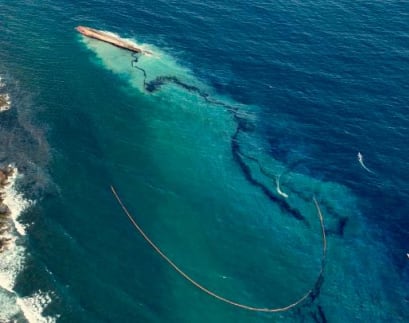
One of the most important aspects of Arctic response is understanding how to detect oil when it is not immediately visible. In ice-affected waters, oil may become trapped beneath ice, contained within ice features, or spread in patterns that are difficult to identify from the surface. For responders, this makes detection, mapping, and monitoring critical parts of any successful response strategy.
Through cold-weather training and exercises, responders develop practical understanding of the techniques used to locate and assess oil in and around ice.
In some cases, the most effective and safest response may involve monitoring and containment until conditions allow safer or more effective recovery later in the season. As ice conditions change, access may improve and oil that was previously hidden or difficult to reach may become more recoverable.
Even with strong detection and monitoring, recovering all the oil may not be realistic in Arctic conditions. Clear, achievable objectives are therefore essential to guide response priorities and support effective decision-making.
Learn more about the operational considerations involved in preparing for an extreme cold-weather response.
The role of modelling and environmental data
Oil spill modelling plays a critical role in Arctic response planning. Models can incorporate cold sea temperatures and oil properties to help predict how a spill may behave and where impacts are most likely to occur.
By using accurate environmental inputs, modelling can support prioritisation efforts, for example, directing resources to protect sensitive areas before oil reaches them. While modelling is inherently predictive and cannot provide certainty, it remains a valuable decision-support tool, particularly in remote and environmentally sensitive regions.
The modelling used does not change in these extreme conditions, it remains the same and adapts to suit the cold adjusting to the impact these temperatures have on the weathering of the oil. Lower temperatures mean less dispersion due to the viscosity increase and less evaporation.
Modelling does not alter the model just because there is ice present, it adapts to suit the cold conditions and the impact it has on weathering.
Training beyond our response team
Cold weather response capability does not sit solely with response organisations. Effective incident management depends on the preparedness of operators, authorities, and other stakeholders who may be involved in decision-making during an incident.
OSRL can provide clients with cold weather specific training and capability assessment, helping them understand:
- How Arctic conditions affect response options
- What realistic response outcomes look like
- How to work effectively with responders during an incident
- How plans and strategies perform when tested against cold weather scenarios
This shared understanding improves coordination and leads to more effective, confident decision-making under pressure.
Exercises as a key preparedness tool
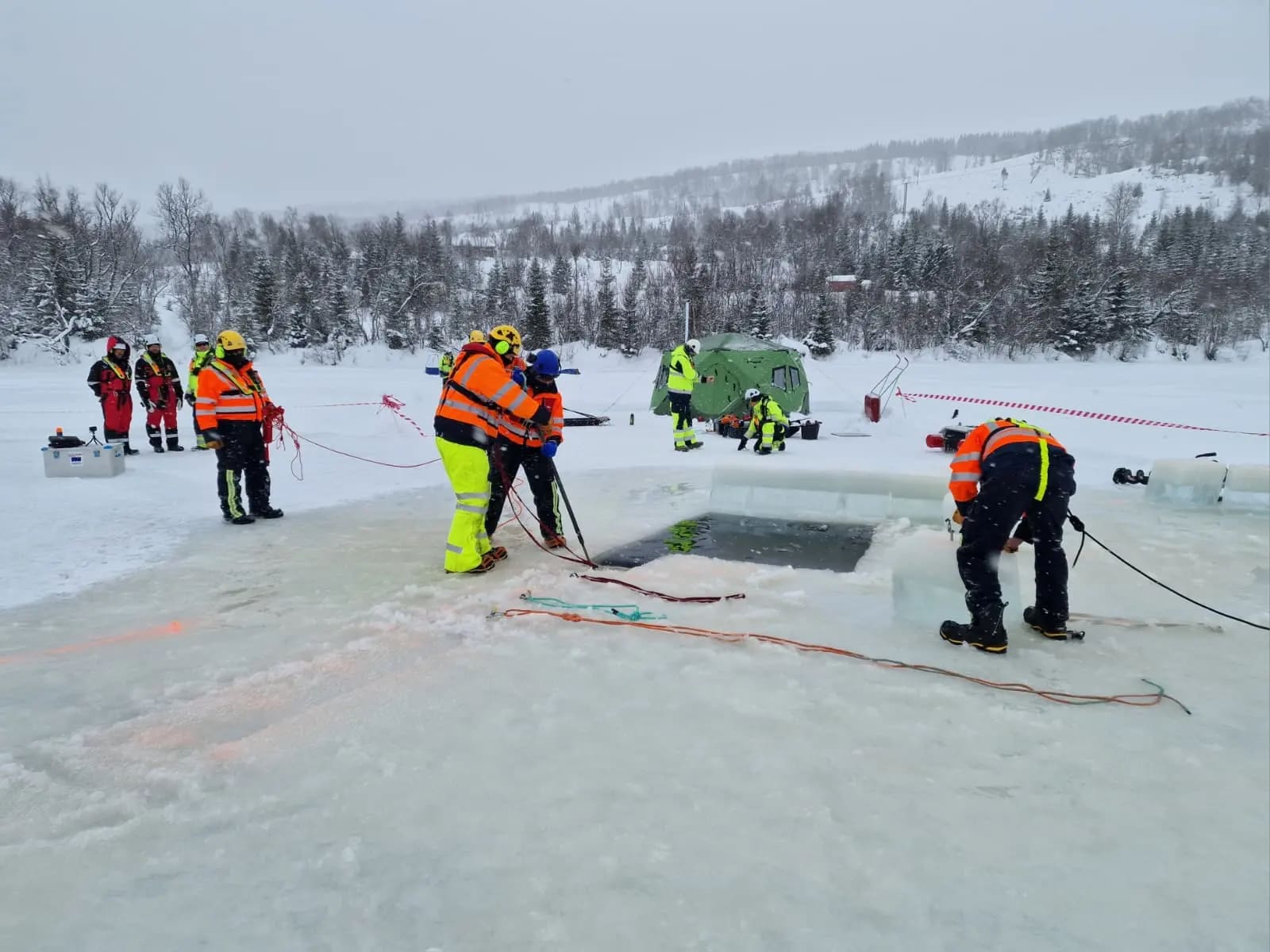
Exercises are a central part of our overall preparedness. By simulating incidents in cold weather contexts, exercises allow teams to test plans, assumptions, and communication pathways before a real incident occurs.
The exercises can range from discussion-based scenarios to operational deployments, but all serve the same purpose: identifying gaps, strengthening collaboration, and improving readiness. In complex environments like the Arctic, these exercises offer a safe way to explore "what if" scenarios without real-world consequences.
Adapting to a changing world
As shipping routes continue to evolve and activity in the Arctic increases, oil spill response capability must grow alongside it. Training, innovation, and continuous learning are essential to meeting the challenges posed by cold, remote, and rapidly changing environments.
Preparing responders, and those who work with them, to operate effectively in the Arctic is not about eliminating risk entirely. It is about understanding and planning for it, whilst ensuring that when an incident occurs, those involved are ready to respond as safely and effectively as possible.