Customised capping stack for South America
Learn how a capping stack was customised to support specific regional operating requirements in South America, helping strengthen source control preparedness and response capability.
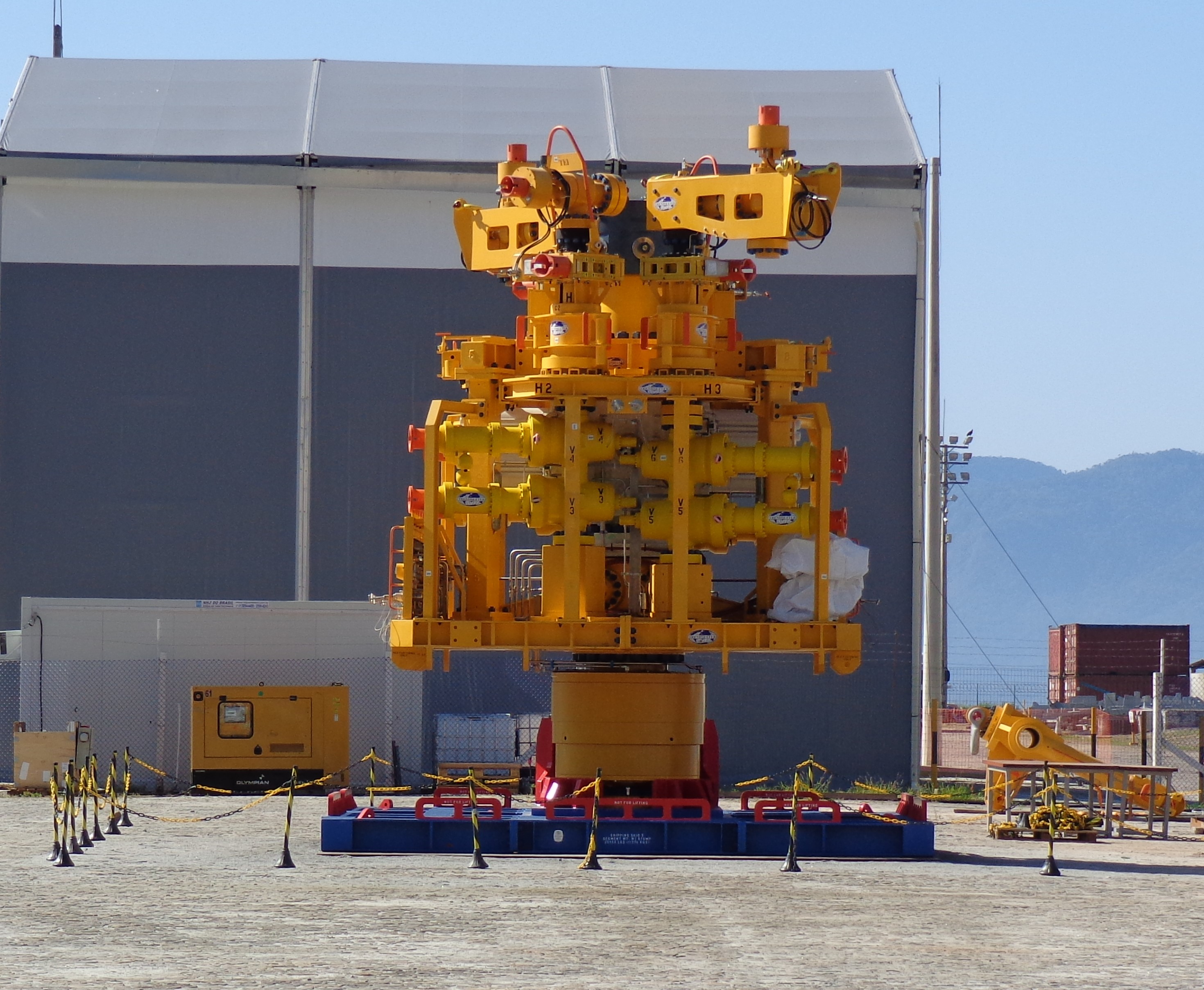

In the rare event of a subsea well control incident, time is critical. Capping is a key source-control response option that provides an immediate, temporary intervention to help safely stop or control the flow of hydrocarbons while a permanent solution, typically a relief well, is developed.
Through our enhanced membership coverage option of the Subsea response service, you gain guaranteed access to four strategically positioned capping stack systems located in Norway, Brazil, Singapore and South Africa, supporting rapid mobilisation and global response readiness.
Engineered Trendsetter Engineering, the systems are designed to safely contain and cap up to 100,000 barrels of oil per day at depths of up to 4,114.8 metres (13,500 feet). Suitable for both exploration and production wells, the capping stacks are modular and configurable to support a wide range of subsea interface requirements and can be transported by air, land or sea.
Two high-pressure 18¾" (15K psi rated Ram Based) capping stacks are located in Norway and Brazil, one high-pressure 7 1⁄16" (15K psi rated Valve Based) system is located in Singapore. A medium-pressure 7 1⁄16" (10K psi Valve Based) system is stored in South Africa.
As custodian of the equipment, OSRL maintains and stores each system to support readiness and assurance that it can be deployed safely and efficiently when required. Members can mobilise up to two of the four available systems, providing operational flexibility and supporting continuity of capability across the membership base.


Select the equipment below to find out more and explore the interactive 3D models of its set-up.
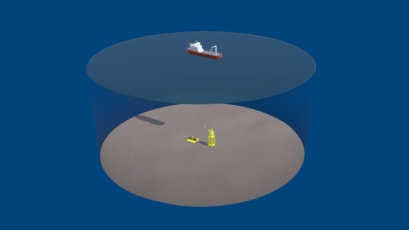
A construction supply vessel will deploy the capped stack above the incident well and lower it onto the incident well.
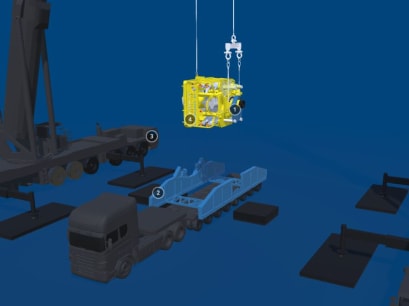
SWIS capping stacks in Norway and Singapore can be air-freighted fully assembled on an AN-124, ensuring pressure integrity and reducing mobilisation time and assembly risks.
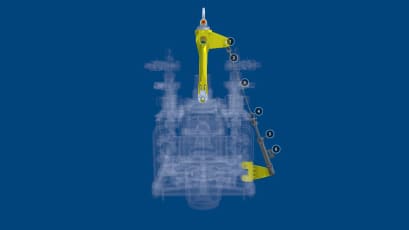
The Inclination Tool is a hydraulically operated tool installed on the capping stack. It can be adjusted to match the inclination angle of the incident BOP/ wellhead.


Our on-demand Source Control training courses provide a structured pathway to build understanding of subsea response operations and equipment. The Introduction to Fundamentals course covers core principles, system components, and deployment considerations across a range of scenarios. Building on this foundation, the Intermediate Mission-Specific course focuses on the practical application of source control strategies in real-world contexts, supporting more informed decision-making during an incident.
A capping stack is a subsea device deployed in the event of a well control incident to temporarily stop the uncontrolled release of hydrocarbons. It is used while a permanent solution, such as a relief well, is implemented.
OSRL members who have the added enhanced membership coverage option of the subsea capping (and OIE) and containment service have access to all four OSRL-maintained capping stacks and are entitled to mobilise up to two systems per incident, ensuring redundancy and availability across the membership base.
Two high-pressure (15K psi) capping stacks are stored in Brazil and Norway, both Ram Based.
A third high-pressure (15K psi) Valve Based system is stored in Singapore.
A medium-pressure (10K psi) Valve Based system is stored in South Africa.
These strategically located systems enable global rapid deployment.
Yes. The systems are packaged for rapid transport by land, sea, or air, and OSRL manages 24/7 readiness, including logistics, maintenance, and mobilisation coordination.
The systems are designed to support a wide range of subsea scenarios and can be configured for exploration and production wells. They connect to various interfaces, including BOPs, flex joints, and wellheads.

With this enhanced membership coverage option, you can strengthen your capabilities, improve response efficiency, and better manage operational risks.
If you would prefer to call us, pick up the phone to speak with our Preparedness Solutions team. We look forward to talking with you!
Regional numbers:
Asia Pacific
+65 6266 1566
Americas
+1 954 983 9880
