
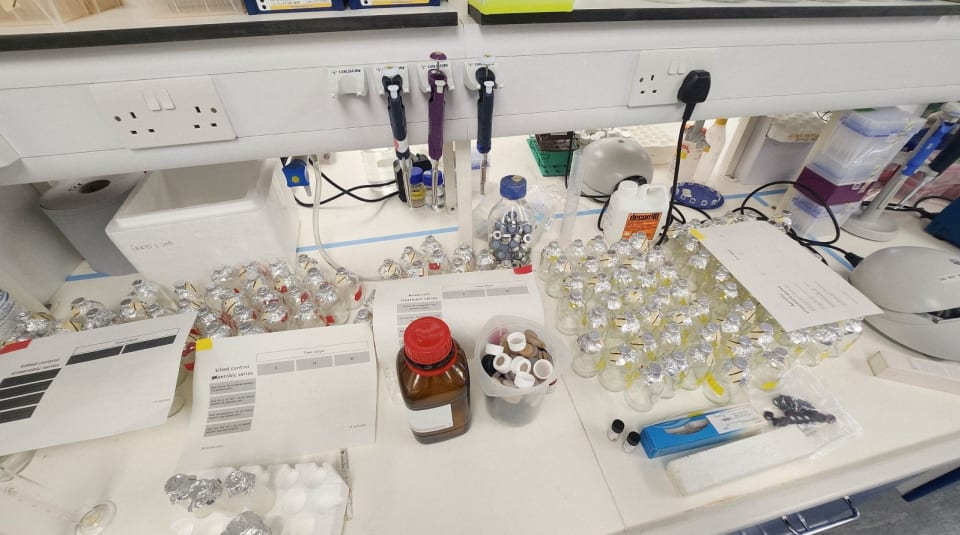
What happens to our oceans when offshore oil and gas platforms reach the end of their operational lives?
The School of Life Sciences at the University of Essex, OSRL, Cefas and Anglia Ruskin University are combining expertise in marine science, environmental monitoring and industry knowledge. The main objective of the research is to understand the hidden role of marine microorganisms in offshore decommissioning and help mitigate potential impacts on our oceans.
Using environmental DNA (eDNA) approaches, the team aims to understand how marine sediment microorganisms can remove petroleum-associated hydrocarbons. Understanding these microbial processes will help build a clearer picture of the environmental fate of contaminants following decommissioning.
What happens to contaminants during decommissioning?
The environmental legacy of offshore oil and gas operations does not necessarily end when production stops. Historical contamination, including petroleum hydrocarbons, can remain within marine sediments for years.
Decommissioning activities can disturb these contaminants in seabed sediments, potentially exposing marine organisms to them. Understanding what happens to these chemicals and how natural microbial communities respond is important when developing environmentally responsible decommissioning strategies.
What have the experiments revealed so far?
Research undertaken by OSRL part-funded Masters student Karen Kamanga at the University of Essex investigated the microbial biodegradation of five petroleum contaminants: phenanthrene, fluoranthene, pyrene, benzo(a)pyrene (BaP) and 4,6-dimethyldibenzothiophene (4,6-DBT).
The research also investigated a mixture of pyrene, BaP and 4,6-DBT. The experiment took place over a 29-day incubation period, with changes in contaminant concentrations measured using gas chromatography-mass spectrometry (GC-MS).
Karen was supervised by Professor Corinne Whitby and Dr Natalie Hicks from the University of Essex, Dr Ben Gregson from Anglia Ruskin University and Dr Clare Hynes from Cefas. Industry partners included Dr Rob Holland and Marta Januszewska at OSRL.
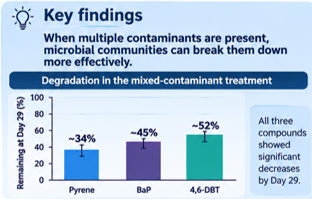
Results from the mixed-contaminant treatment after the 29-day experiment. |
One of the key findings was that, when contaminants were present as a mixture, the microbial communities could break them down more effectively than when the compounds were tested individually.
|
While the overall abundance of bacterial and archaeal communities was largely unchanged, fungal abundance increased significantly in the mixed-contaminant treatment.
Changes in microbial abundance alone cannot establish which organisms were responsible for degradation. However, the findings raise interesting questions about the possible contribution of fungi to contaminant removal and degradation.
Microbial responses to petroleum contamination are complex. This is where eDNA approaches can be particularly valuable, helping identify the marine microorganisms that could contribute to natural recovery following sediment disturbance and informing whether additional remediation measures may be needed.
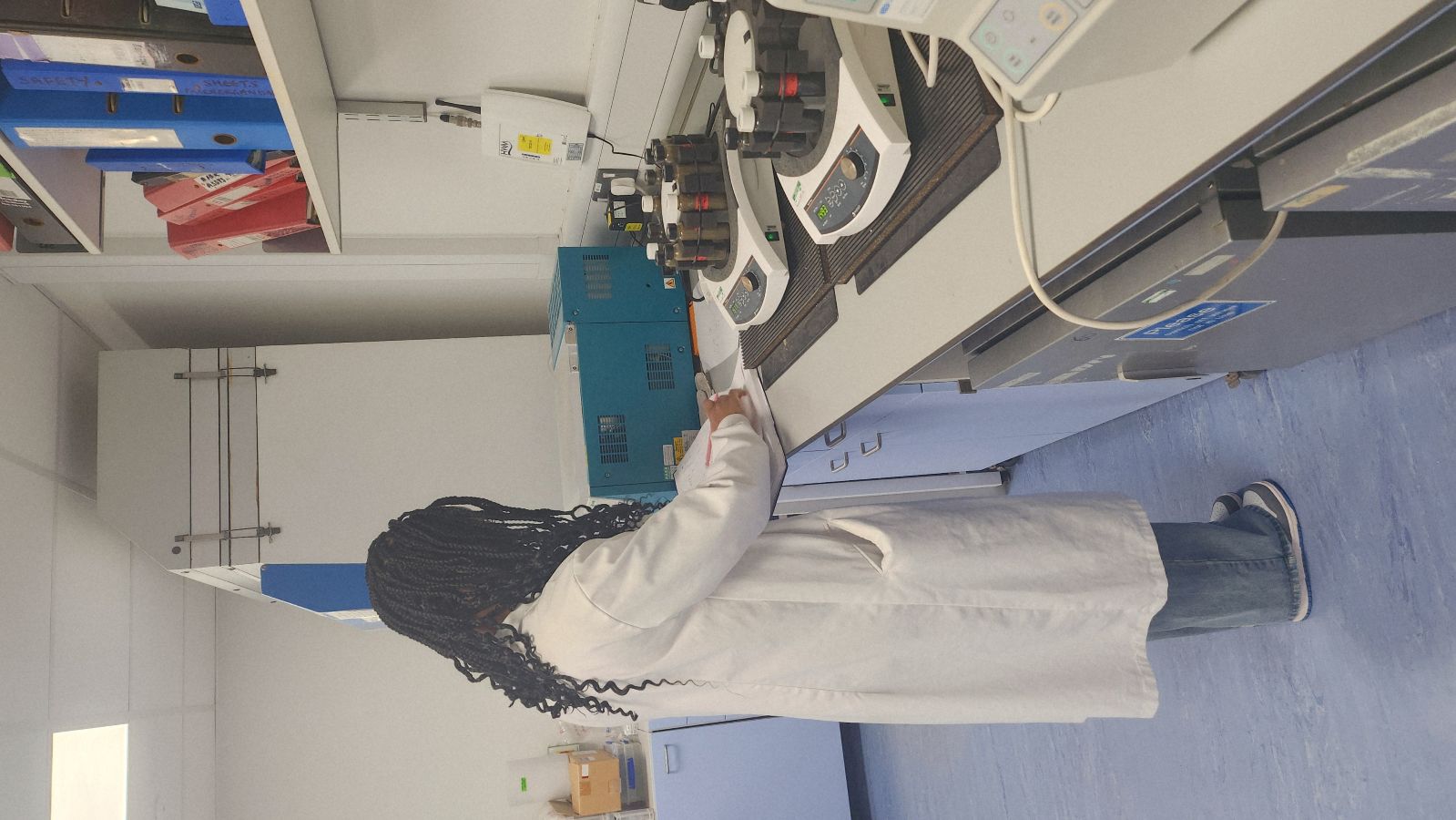
Laboratory experiments investigating how microbial communities respond to petroleum contaminants.
What do the findings mean?
The findings so far suggest that the fate of petroleum contaminants may depend not only on the chemical properties of individual compounds, but also on the presence of other compounds in the environment.
This research is ultimately about ensuring that the environmental legacy of offshore oil and gas infrastructure is properly understood before sites are decommissioned.
What’s next?
This project builds on a successful track record of collaboration between OSRL, the University of Essex and Cefas through joint postgraduate studentships, research grants, publications and knowledge exchange activities.
The work will continue to build understanding of microbial responses to petroleum contaminants, helping inform offshore decommissioning and supporting the future protection of marine ecosystems.
Reducing the effect on our oceans means understanding not only the pollution we can see, but also the microscopic communities working beneath the surface.


